How to Caption an International University Lecture on a Budget

In an international lecture, students often have very different levels of language comprehension. Live captions preserve the original talk while adding language support and an exportable transcript.
Which campus events fit?
Guest lectures, international forums, exchange-student briefings, bilingual open classes, and inter-university seminars are good candidates. Degree examinations, legal statements, and procedures requiring exact quotation need professional interpreting or human records.
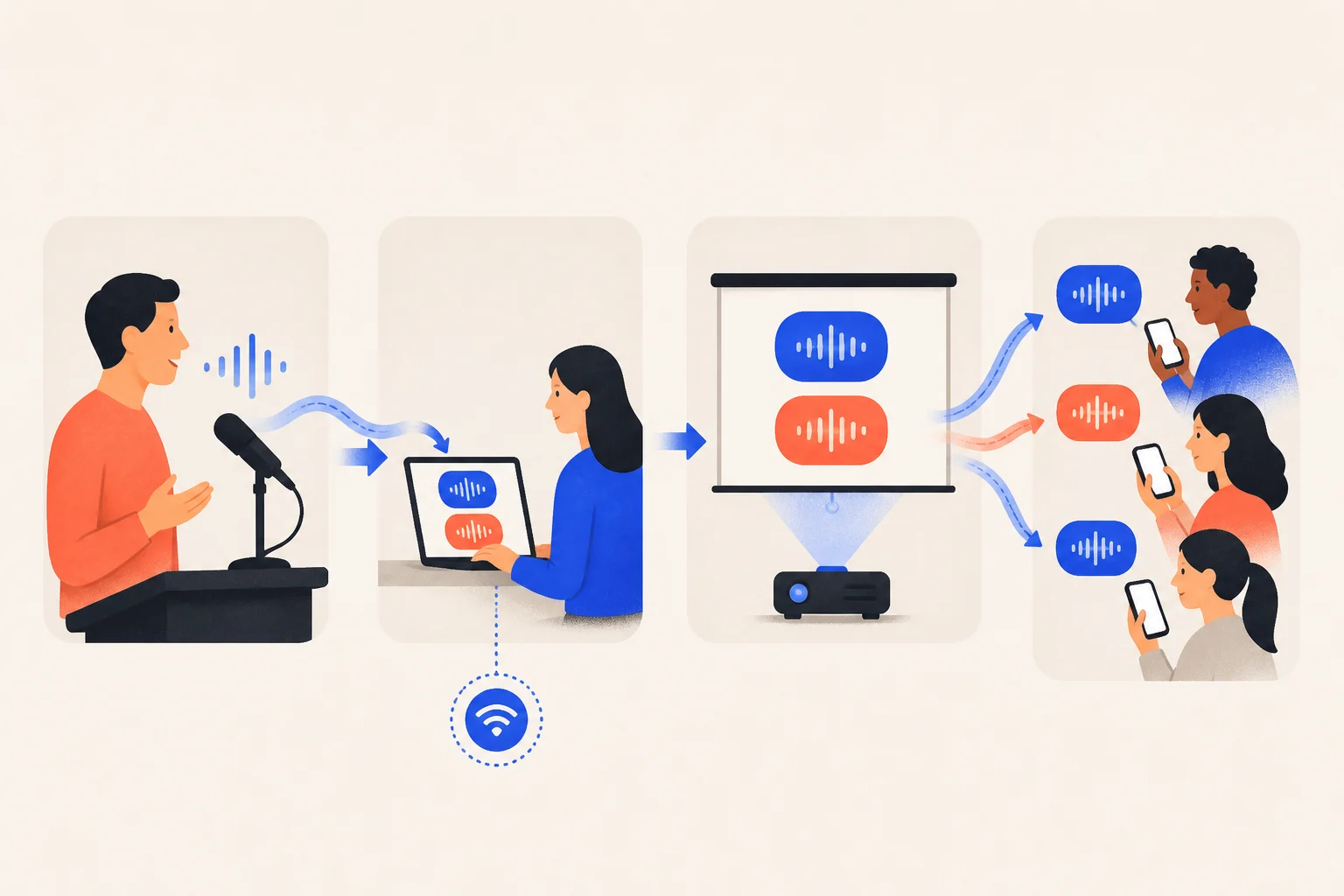
Equipment and staffing
- Confirm a speaker-mic output from the venue mixer.
- Prepare a signed-in control computer and stable browser.
- Project the main caption language and share a QR for others.
- Prepare a hotspot and backup mic or audio path.
- Assign one operator to captions and Q&A microphones.
Screen, phone, and export
| Output | Advantage | Use |
|---|---|---|
| Venue screen | Visible to everyone | Main language or transcript |
| Student phones | Language choice without covering slides | International audience |
| Post-event export | Reusable record and subtitles | Summary, editing, archives |
Prepare academic terminology
Request the speaker’s spelling, slides, abstract, and keywords. Add department names, methods, acronyms, and specialist terms to the glossary; even the top 20 terms make a difference.
Use risk, not price, as the criterion
Automated captions lower barriers for ordinary knowledge-sharing events. Diplomacy, policy, medical, and major decision contexts still call for professional interpreters.